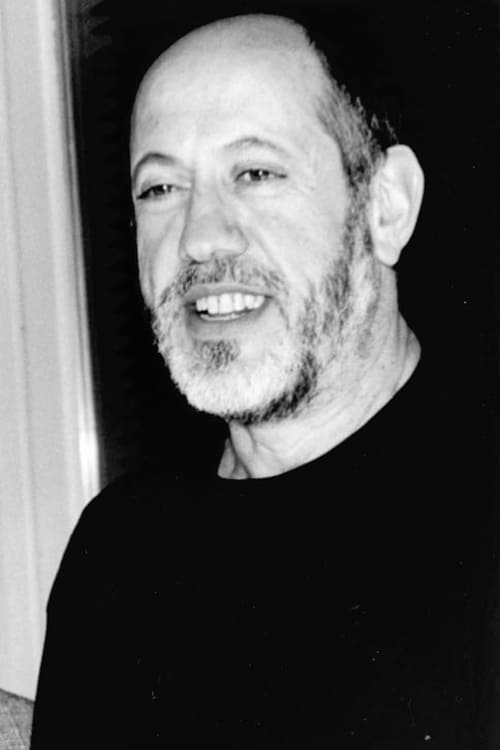
Michel Nedjar
Directing
Biography
Master of Art Brut, Michel Nedjar was born in 1947 in the Val d'Oise to a Jewish family marked by war and the holocaust. His father, born in Algiers, settled in Paris in 1921 as a tailor. At home, he tinkered on a sewing machine doll clothes for his sisters. During the Second World War, a large part of his family fell victim to Nazi oppression.
In 1960, he became aware of the magnitude of the Holocaust. At the age of fourteen, he enrolled in a vocational school to become a tailor and sells jeans with his flea grandfather from Saint-Ouen and accompanies his grandmother to the scrap fair; she makes him share his love for Shmattès (the worn cloth) that she picks up and stacks. In the spring of 1967, he left for military service. With tuberculosis and declared disabled in 1968, he spent a few months in a school of fashion stylist. He is upset by the vision of 'Night and Fog' by Alain Resnais, echoing his own disappearances in his family.
In the years 1970-1975, he left with Teo Hernandez. His travels take him to Morocco, Asia Minor, Europe and Mexico. He discovers cultures rich in symbolic expressions. He begins to take an interest in the funeral art and the dolls whose magic function fascinates him. Returning to Paris in 1976, he began making his first dolls called "Chairdâmes" with rags that he gleaned in the neighborhood of the Goutte d'Or, then made dolls dyed. In 1978, a period of depression transformed his style: his dolls look like gargoyles and terrifying totems, they are sometimes soiled with dirt and even blood. It was in 1980 that he began to draw with grease pencils on recovered flea media.
He made his first films in 8 mm from 1964 during his holidays in Greece or the Balearic Islands. Like Lionel Soukaz, he is one of the first French experimental filmmakers to address the theme of homosexuality (Le gant de l'autre, 1977). His practice will evolve towards a more formal exploration of the characteristics of cinema: luminous calligraphies (Gestuel, 1978), grain of the film (Le grain de la peau, 1986); either to direct cinema (Monsieur Loulou, 1980). These research finds their paroxysm in Capitale-paysage (1982-83), mixing snatches of conversations, work of concrete sound and rhythm, and kaleidoscopic effects.
As actor 30


On the crew 35


